Acontece que o entendimento geral em Portugal é o de não se poder confiar em José Sócrates e no PS. É um tópico que, por absolutamente evidente e notório, não carece de qualquer desenvolvimento, nem de demonstração e prova.
16 Setembro
O resultado das legislativas não se limita a traduzir a profunda estupidez com que o eleitorado nacional se comportou. Levará o País aceleradamente na pior das sendas.
Hoje
Mostrar mensagens com a etiqueta Humor. Mostrar todas as mensagens
Mostrar mensagens com a etiqueta Humor. Mostrar todas as mensagens
quarta-feira


terça-feira
sexta-feira
quinta-feira
Campanha agnóstica na Inglaterra

Provavelmente deus não existe. Agora pára de te preocupar e goza a vida.
Reacção:
Perhaps I’m simply not aware of the argumentative power of urban transit, but I find bus ads particularly unlikely to be compelling on matters of such importance. Is it really likely that some nice believer taking a walk, to brunch perhaps, or the park, will see the BHA ads lumbering by, with its grimy city smell and its noisy engine racket, and suddenly think: "Oh dear, oh dear. All that fluffy stuff about heaven is probably nonsense, isn’t it?" Whoosh! The bus roars by and the person’s faith disintegrates in a cloud of engine exhaust.
Talvez eu não esteja bem a ver o poder argumentativo do tráfego urbano, mas eu acho os anúncios, e particularmente aqueles em autocarros, desprovidos de apelo em assuntos de tal importância. Qual é a probabilidade de um simpático crente a descer a rua no seu caminho para o café ou para o jardim, ver o anúncio da Associação Humanista Britânica a passar, envolvido no cheiro sujo da cidade e no barulho do trânsito, e subitamente pensar: "Ai a minha vida! Toda aquela história melada sobre o paraíso é provavelmente um disparate!" Vrummm! O autocarro passa num ronco e a fé da pessoa desintegra-se numa nuvem de fumo de escape.
Ha ha ha ha ha
Os anglo-saxónicos são os mais engraçados a dissentir.
Não me parece que o objetivo do anúncio seja a conversão, mas acho piada imaginar o "Oh dear, Oh dear", estilo Miss Marple.
terça-feira
quarta-feira

quinta-feira
terça-feira
quinta-feira
Anedotas do Leste
Num comboio viajavam Stalin, Khrushchov, Brejnev e Gorbatchov. A certa altura o comboio pára e assim fica. Após algum tempo Stalin impacienta-se e estrebucha: "Deviamos fuzilar o maquinista!". "Niet, basta reabilitá-lo." - diz Khrushchov. "Fechemos as cortinas e façamos de conta que ainda estamos a andar" - interpoe Brejnev. "Olhem. E se saíssemos e empurrássemos?" - propoe Gorbatchov.
Na Roménia dois homens estao numa bicha para comprar pao. Após horas um deles impacienta-se: "Estou farto disto, deste sistema! Vou matar Ceausescu!". E vai-se embora. Duas horas depois retorna. "Entao? ". "A bicha lá ainda é mais comprida que esta."
- Alembradas de um documentário sobre o humor no leste europeu.
Na Roménia dois homens estao numa bicha para comprar pao. Após horas um deles impacienta-se: "Estou farto disto, deste sistema! Vou matar Ceausescu!". E vai-se embora. Duas horas depois retorna. "Entao? ". "A bicha lá ainda é mais comprida que esta."
- Alembradas de um documentário sobre o humor no leste europeu.
sábado
quinta-feira
Fazer é comprar
Discordo. Passei uns breves dias na mae-nave e parece-me que em Portugal fazer é comprar. Ler é simplesmente esquisito. Uma sociopatia manienta. A nao ser que seja algo do Rodrigues dos Santos.
P.S.: dos que leem no wc pareceu-me coerente que lessem o expresso. Contudo, a minha amostra nao é de forma alguma exaustiva e inclui-me, o que limita enormemente conclusoes definitivas.
P.S.: dos que leem no wc pareceu-me coerente que lessem o expresso. Contudo, a minha amostra nao é de forma alguma exaustiva e inclui-me, o que limita enormemente conclusoes definitivas.
quarta-feira
Brüno
Sacha Baron Cohen é o actor que faz de Borat. Outra das suas personagens é Bruno (ou Brüno), um jornalista de moda austríaco e muito obviamente gay. Parece que o próximo filme é com Brüno e começam a sair pela net conselhos para que ninguém se veja na desfortuna de se encontrar num filme em que se faça papel de asno.
Os conselhos sao:
1. Mantenha uma fotografia do Brüno sempre consigo.
2. Se alguém lhe pedir para assinar uma declaraçao dando permissao para entrar num filme, pense.
3. Por exemplo, pense em dizer nao.
4. Nao se embebede com estranhos.
5. Se for racista, homofóbico ou sexista tente mante-lo só pra si.
Ha ha ha ha ha...

Os conselhos sao:
1. Mantenha uma fotografia do Brüno sempre consigo.
2. Se alguém lhe pedir para assinar uma declaraçao dando permissao para entrar num filme, pense.
3. Por exemplo, pense em dizer nao.
4. Nao se embebede com estranhos.
5. Se for racista, homofóbico ou sexista tente mante-lo só pra si.
Ha ha ha ha ha...
Ide ver
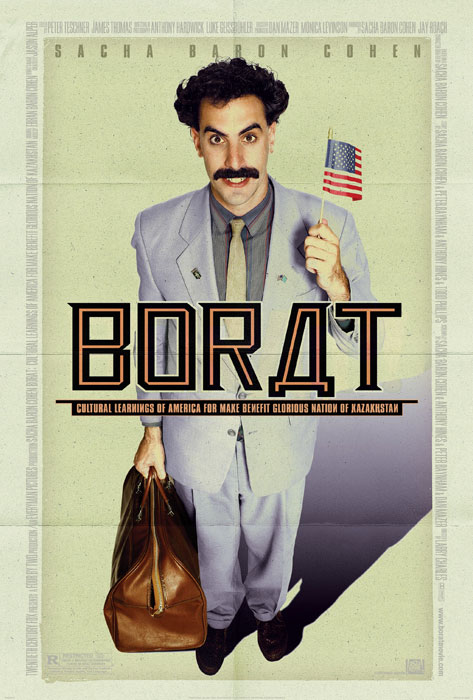
P.S.: uma amiga disse-me que a polícia foi chamada 91 vezes durante a feitura deste filme. Esta dúvida andava a rondar-me.
domingo
sexta-feira
Consensus: science is friggin' hard
Oh random, para ti:
The National Science Foundation's annual symposium concluded Monday, with the 1,500 scientists in attendance reaching the consensus that science is hard.
"For centuries, we have embraced the pursuit of scientific knowledge as one of the noblest and worthiest of human endeavors, one leading to the enrichment of mankind both today and for future generations," said keynote speaker and NSF chairman Louis Farian. "However, a breakthrough discovery is challenging our long-held perceptions about our discipline—the discovery that science is really, really hard."
"My area of expertise is the totally impossible science of particle physics," Farian continued, "but, indeed, this newly discovered 'Law of Difficulty' holds true for all branches of science, from astronomy to molecular biology and everything in between."
The science-is-hard theorem, first posited by a team of MIT professors in 1990, was slow to gain acceptance within the science community. It gathered momentum following the 1997 publication of physicist Stephen Hawking's breakthrough paper, "Lorentz Variation And Gravitation Is Just About The Hardest Friggin' Thing In The Known Universe."
This weekend's conference, featuring symposia on how hard the Earth sciences are, how confusing medical science is, and how ridiculously un-gettable quantum physics is, represented a major step forward for the science-is-hard theorem.
"We now believe that the theorem is 99.999% likely to be true, after applying these incredibly complex statistical techniques that gave me a splitting headache," Farian said. "A theorem is like a theory, but, I don't know, it's different."
Members of the scientific establishment were quick to affirm the NSF discovery.
"To be a scientist, you have to learn all this weird stuff, like how many molecules are in a proton," University of Chicago physicist Dr. Erno Heidegger said. "While it is true that I have become an acclaimed physicist and reaped great rewards from my career, one must not lose sight of the fact that these blessings came only after studying all of this completely impossible, egghead stuff for years."
Dr. Ahmed Zewail, a Caltech chemist whose spectroscopic studies of the transition states of chemical reactions earned him the Nobel Prize in 1999, explained in layman's terms just how hard the discipline of chemistry is, using the periodic table of the elements as a model.
"Take the element of tungsten and work to memorize its place in the periodic table, its atomic symbol, its atomic number and weight, what it looks like, where it's found, and its uses to humanity, if any," Zewail said. "Now, imagine memorizing the other 100-plus elements making up the periodic table. You'd have to be, like, some kind of total brain to do that."
As hard as chemistry and other traditional sciences may be, scientists say such newer disciplines as quantum physics are even more difficult.
"Quantum physics has always been a particularly tough branch of science," UCLA physicist Dr. Hideki Watanabe said. "But in addition to being some of the smartest Einstein-y stuff around, it is undeniably a really stupid, pointless thing to study, something you could never actually use in the real world. This paradoxical dual state may one day lead to a new understanding of physics as a way to confuse and bore people."
"I guess there's cool stuff about science," Watanabe continued, "like space travel and bombs. But that stuff is so hard, it's honestly not even worth the effort."
P.S.: penso que desisti de assassinar este blogue. So' se eu simplesmente deixar de vir ver o que o resto da malta escreve. Uma despedida tao linda... {que vergonha... suspiro}
The National Science Foundation's annual symposium concluded Monday, with the 1,500 scientists in attendance reaching the consensus that science is hard.
"For centuries, we have embraced the pursuit of scientific knowledge as one of the noblest and worthiest of human endeavors, one leading to the enrichment of mankind both today and for future generations," said keynote speaker and NSF chairman Louis Farian. "However, a breakthrough discovery is challenging our long-held perceptions about our discipline—the discovery that science is really, really hard."
"My area of expertise is the totally impossible science of particle physics," Farian continued, "but, indeed, this newly discovered 'Law of Difficulty' holds true for all branches of science, from astronomy to molecular biology and everything in between."
The science-is-hard theorem, first posited by a team of MIT professors in 1990, was slow to gain acceptance within the science community. It gathered momentum following the 1997 publication of physicist Stephen Hawking's breakthrough paper, "Lorentz Variation And Gravitation Is Just About The Hardest Friggin' Thing In The Known Universe."
This weekend's conference, featuring symposia on how hard the Earth sciences are, how confusing medical science is, and how ridiculously un-gettable quantum physics is, represented a major step forward for the science-is-hard theorem.
"We now believe that the theorem is 99.999% likely to be true, after applying these incredibly complex statistical techniques that gave me a splitting headache," Farian said. "A theorem is like a theory, but, I don't know, it's different."
Members of the scientific establishment were quick to affirm the NSF discovery.
"To be a scientist, you have to learn all this weird stuff, like how many molecules are in a proton," University of Chicago physicist Dr. Erno Heidegger said. "While it is true that I have become an acclaimed physicist and reaped great rewards from my career, one must not lose sight of the fact that these blessings came only after studying all of this completely impossible, egghead stuff for years."
Dr. Ahmed Zewail, a Caltech chemist whose spectroscopic studies of the transition states of chemical reactions earned him the Nobel Prize in 1999, explained in layman's terms just how hard the discipline of chemistry is, using the periodic table of the elements as a model.
"Take the element of tungsten and work to memorize its place in the periodic table, its atomic symbol, its atomic number and weight, what it looks like, where it's found, and its uses to humanity, if any," Zewail said. "Now, imagine memorizing the other 100-plus elements making up the periodic table. You'd have to be, like, some kind of total brain to do that."
As hard as chemistry and other traditional sciences may be, scientists say such newer disciplines as quantum physics are even more difficult.
"Quantum physics has always been a particularly tough branch of science," UCLA physicist Dr. Hideki Watanabe said. "But in addition to being some of the smartest Einstein-y stuff around, it is undeniably a really stupid, pointless thing to study, something you could never actually use in the real world. This paradoxical dual state may one day lead to a new understanding of physics as a way to confuse and bore people."
"I guess there's cool stuff about science," Watanabe continued, "like space travel and bombs. But that stuff is so hard, it's honestly not even worth the effort."
P.S.: penso que desisti de assassinar este blogue. So' se eu simplesmente deixar de vir ver o que o resto da malta escreve. Uma despedida tao linda... {que vergonha... suspiro}
sexta-feira
quinta-feira
Aaltra
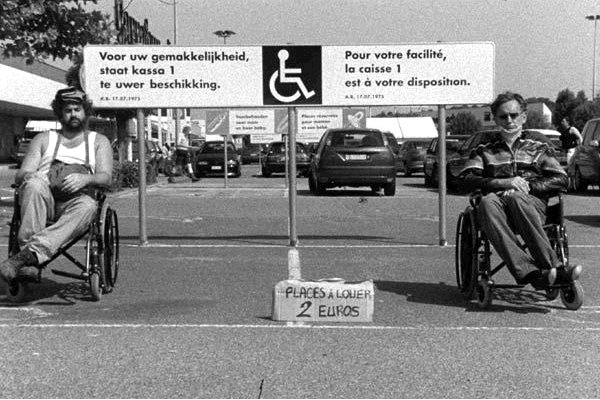
Penso que em toda a minha vida só vi três filmes belgas, mas todos eles eram de humor negro. Não sei se é coincidência, se é só o que sai para fora, mas um dia destes ainda me apanham a dizer que sentido de humor, do bom, do que eu gosto é o belga. Qual humor inglês! Foi chão que deu uvas.
Aaltra é um road movie em cadeiras de rodas. Imaginem bem o que pode acontecer numa viagem destas. Parem. Não conseguem. Não vão conseguir imaginar como passo a passo, correcção, rodadela em rodadela, dois imobilizados andam à boleia pelas estradas do norte da Europa, metendo-se e provocando situações politicamente incorrectas. É a cadeira motorizada que roubam a um casal velhinho para depois andarem em corridas na rotunda da terra ou as vezes em que os que resolvem ajudá-los acabam por os abandonar em maldições à beira de alguma estrada.
Não há aqui nenhuma comiseração, não há alegria ou tristeza sem remissão. Não há pinturas emocionais ou maniqueísmos, não há sequer cor. Há simplesmente um espelho que mostra o mundo dos outros direito quando parece distorcido. Ou vice-versa, que cada um veja o filme e o julgue. Não perde tempo.
Subscrever:
Mensagens (Atom)